Solutions · Digital & Smart O&M
Energy Consumption Optimization: VFD strategies for lowest kWh per ton of permeate
Pair pump curves, setpoints, and turndown reality: VFD-led energy footprints for membrane trains without sacrificing margin on membrane stress.
Use this guide within its scope
This page supports technical research and option comparison and is marked 2026. Illustrative values are not a quotation, completed process design, certification conclusion, or performance guarantee. Check current regulations, feed data, tests, and OEM records.
Problem
Fixed-speed operation leaves kWh/m³ on the table; aggressive turndown can quietly damage membranes.
Technology
Setpoint policies grounded in pump affinity laws, instrument feedback, and agreed membrane stress envelopes.
Results
Measurable kWh/m³ reduction with guardrails operators can defend in reliability reviews.
Engineering decision card
Use when
Fixed-speed operation leaves kWh/m³ on the table; aggressive turndown can quietly damage membranes.
Evaluate first
Setpoint policies grounded in pump affinity laws, instrument feedback, and agreed membrane stress envelopes.
Inputs still required
Feed source and variability, capacity, target quality, operating hours, discharge or reuse boundary, available space, and utilities.
Comparison output
Measurable kWh/m³ reduction with guardrails operators can defend in reliability reviews. The final decision still needs feed data, mass balance, and any necessary testing.
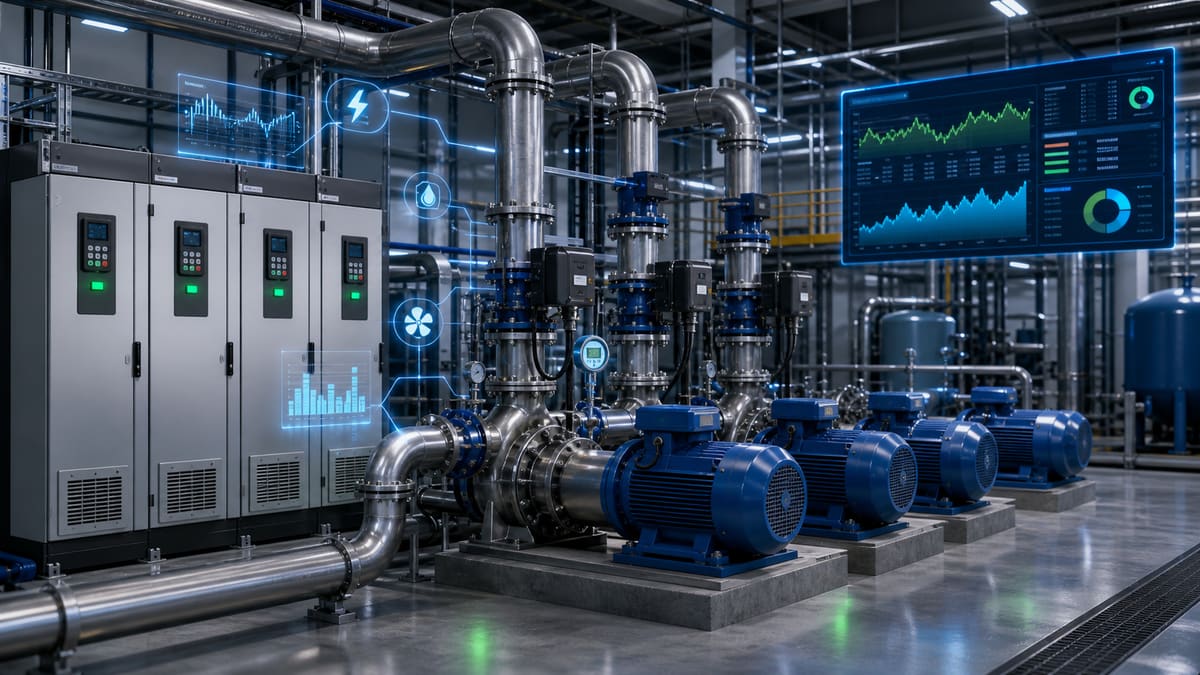
Energy Consumption Optimization: VFD Strategies for Lowest kWh per Ton of Permeate
Achieving operational certainty and supply-chain efficiency in water treatment and industrial processes hinges on optimizing every kilowatt-hour. For plants relying on membrane filtration, intelligent Variable Frequency Drive (VFD) strategies are not just about saving energy; they're about producing permeate at the lowest possible cost, enhancing equipment longevity, and ensuring consistent output even as conditions fluctuate.
VFDs regulate the speed of electric motors by varying the frequency and voltage of their power supply. In pumping applications—critical for membrane processes like Reverse Osmosis (RO) or Ultrafiltration (UF)—this means precisely controlling flow and pressure. While traditional VFD implementation might be static or react to simple setpoints, this approach’s approach leverages advanced algorithms to dynamically optimize pump performance, minimizing energy consumption per unit of produced water (kWh/ton of permeate) across varying operational demands and feedwater conditions. This isn't just about turning a dial; it's about a continuous, data-driven quest for the efficiency frontier.
Traditional vs engineering evaluation path
Consider a large-scale desalination or industrial water treatment plant responding to fluctuating water demand and changing feedwater quality.
| Traditional way | engineering evaluation path way |
|---|---|
| Reactive manual adjustments: Operators periodically check permeate flow and quality, making manual VFD adjustments to pumps, often erring on the side of higher pressure for safety margins. | Proactive AI-driven optimization: engineering evaluation path platform continuously analyzes real-time feedwater quality (TDS, temperature, turbidity), permeate demand, and membrane fouling rates. It dynamically adjusts VFDs to maintain optimal flux at the minimum effective pressure, predicting and preventing energy spikes. |
| Delayed insights: Energy consumption data is often reviewed weekly or monthly, making it difficult to pinpoint inefficiencies or correlate them directly with operational changes. | Real-time kWh/ton metrics: Instantaneous display and historical trending of kWh per ton of permeate, allowing operators and managers to see the direct energy impact of every operational decision and system state. |
| Increased wear & tear: Pumps often run at sub-optimal speeds or higher pressures than necessary, leading to accelerated wear on mechanical components, frequent cavitation issues, and shorter asset lifecycles. | Extended asset life: By ensuring pumps operate at their most efficient points, engineering evaluation path reduces mechanical stress, minimizes vibration, and extends the operational lifespan of VFDs, motors, and pumps, deferring capital expenditure. |
| Ad-hoc spare parts management: Pump failures lead to emergency spare part orders, often involving expedited shipping and costly downtime due to unpredictable maintenance schedules. | Predictive maintenance & supply chain integration: Pump health monitoring and VFD data predict potential failures. The system automatically triggers spare parts replenishment orders with agreed-upon vendors, ensuring parts arrive before they are critically needed, minimizing downtime and logistics costs. |
Data Security & Trust in 2026
- AES-256 encryption for data at rest and TLS 1.3 for data in transit.
- Role-based access control (RBAC) configurable to your internal security policies.
- Audit trails for all data access and system configuration changes.
- Regular third-party security audits and penetration testing.
At the core of informed decision-making for energy optimization, whether adjusting pump speeds or scheduling maintenance, is accurate, real-time data from the field. Our intelligent VFD strategies directly leverage online instruments measuring flow rates, pressures across membrane trains, feedwater conductivity, ORP, and tank levels to feed precise, actionable data into the optimization algorithms. These real-time inputs are the eyes and ears of the this approach system, allowing it to adapt swiftly to changing process conditions.
engineering evaluation path Differentiation: Coordinated Intelligence
Our platform goes beyond individual asset control by correlating VFD performance data with membrane health, chemical dosing, and overall plant output. This intelligence then feeds into a coordinated system:
FAQ
Q: What kind of ROI can we realistically expect from optimizing VFDs with this approach? A: While specific ROI varies based on plant size, operational inefficiencies, and energy costs, our clients typically see significant reductions in energy consumption, often ranging from 10% to 25% for VFD-controlled pumps, leading to payback periods measured in months, not years. This doesn't even account for the extended asset life and reduced maintenance costs.
Related equipment & product lines
These categories typically support the approach above—open any line to compare brands and models.
- Instrumentation & SensorsOnline measurement and control: flow, level, pressure, and water-quality sensors indexed from the Lenntech instrumentation hub.View category →
- Pumps & PumpingHigh-pressure and process pump solutions for water treatment skids and plants.View category →
- InvertersVariable-frequency drives and inverter systems for variable-speed motor control.View category →
For a closer review, use the engineering inquiry form to share feed, capacity, target, and project stage. Submission does not constitute a completed design or performance commitment.