Solutions · Digital & Smart O&M
Sourcing Transparency & Audit: field verification for overseas buyers of Chinese water-treatment components
Structured factory walks, test evidence, and document packs—so 'trusted supplier' means inspectable, not rhetorical.
Use this guide within its scope
This page supports technical research and option comparison and is marked 2026. Illustrative values are not a quotation, completed process design, certification conclusion, or performance guarantee. Check current regulations, feed data, tests, and OEM records.
Problem
Remote PDFs do not replace eyes on welding, wiring, and calibration culture.
Technology
engineering evaluation audit templates aligned to category risk: membranes, skids, instruments, and chemicals.
Results
Procurement committees get comparable evidence across vendors—faster approvals, fewer surprises at FAT.
Engineering decision card
Use when
Remote PDFs do not replace eyes on welding, wiring, and calibration culture.
Evaluate first
engineering evaluation audit templates aligned to category risk: membranes, skids, instruments, and chemicals.
Inputs still required
Feed source and variability, capacity, target quality, operating hours, discharge or reuse boundary, available space, and utilities.
Comparison output
Procurement committees get comparable evidence across vendors—faster approvals, fewer surprises at FAT. The final decision still needs feed data, mass balance, and any necessary testing.
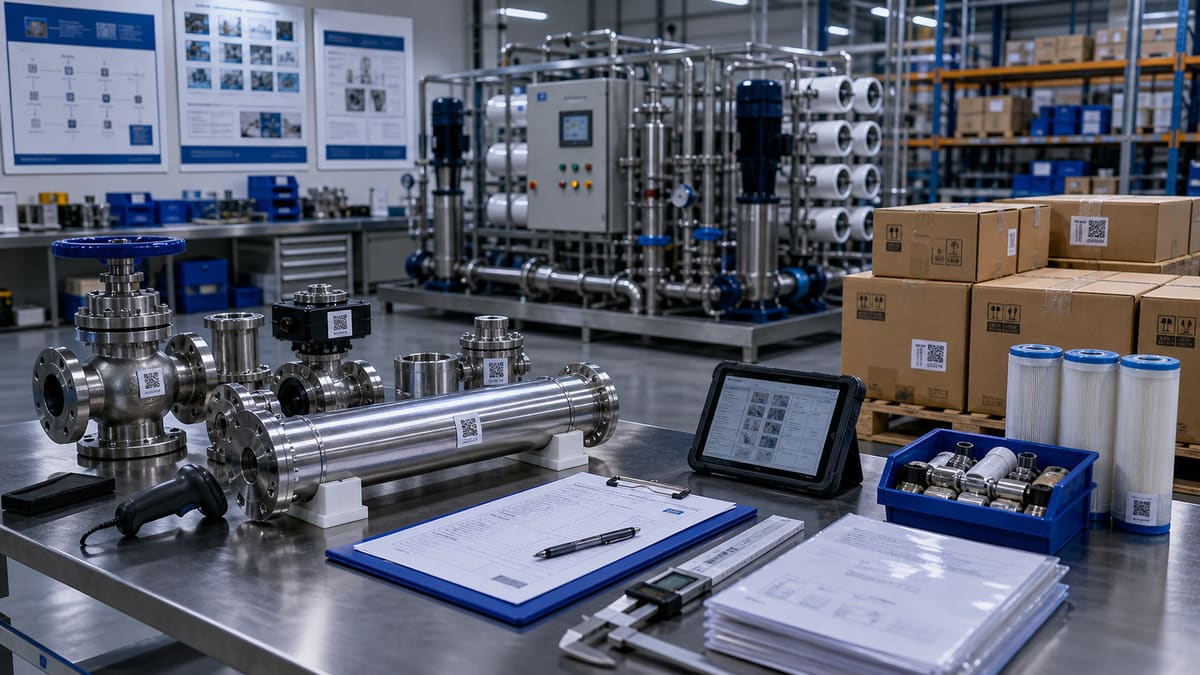
Bridging the Global Sourcing Gap with Digital Certainty
We empower buyers with a verified digital twin of their components' journey, from factory floor to installation. This includes not just documentation, but also timestamped visual evidence, real-time production data (where available and consented), and independent field verification reports. This robust data stream provides an auditable trail, giving you the confidence that your investment in a critical piece of water infrastructure is secured by actionable intelligence, not just promises.
Traditional vs engineering evaluation path
| Traditional way | engineering evaluation path way |
|---|---|
| Component Verification Scenario: Membrane Shipment | Component Verification Scenario: Membrane Shipment |
| - Verification: Ad-hoc local inspector confirms pallet count post-production. Trusts factory's internal QA report for critical dimensions and integrity. | - Verification: engineering evaluation path field team conducts verified pre-shipment audit. Digital twin updated with high-res photos, serial numbers, and a 3rd-party integrity test report, directly comparing to PO specs. |
| - Risk: Discrepancies in membrane pore size or material discovered only upon arrival at installation site, 8-12 weeks later. Potential for critical project delays and costly re-shipments. | - Risk Mitigation: Discrepancies identified before shipment, often within 24-48 hours of production completion. Allows for immediate supplier correction or alternative sourcing without impacting project timelines. |
| - Data & Audit: Paper certificates and emailed photos are manually filed. No direct linkage to specific operational data or future maintenance needs. | - Data & Audit: All verification data (photos, reports, tests) are digitally linked to the component's unique ID, stored in a secure platform, and instantly available for audit, commissioning, and long-term asset management. |
| - Cost & Time: Hidden costs in managing potential rework/returns, re-scheduling labor, and extended commissioning. Leads to 15-20% project cost overruns due to unforeseen delays. | - Cost & Time: Proactive verification eliminates costly surprises. Reduces risk of project overruns by minimizing component-related delays, saving 10-15% on contingency budgets and ensuring on-time commissioning. |
The Role of Online Instrumentation in Field Verification
Digital services for sourcing and operational transparency depend fundamentally on field truth. For water treatment components, this often means integrating insights from robust online instruments. Whether it's verifying the performance characteristics of a procured pump during a factory acceptance test or ensuring a membrane module meets flux and rejection specifications, data from online flow, pressure, conductivity, ORP, or level instruments provides objective, quantifiable evidence. This instrument data, combined with visual verification, forms the bedrock of our transparency reports. It confirms that the physical characteristics and initial performance of your sourced components align precisely with your contractual requirements, long before they even reach your plant.
Data Security & Trust
In 2026, concerns about data integrity and privacy are paramount, especially when sensitive supply chain and operational data crosses international borders. this approach is built with security from the ground up, acknowledging that your data is your asset.
Related equipment & product lines
These categories typically support the approach above—open any line to compare brands and models.
- Instrumentation & SensorsOnline measurement and control: flow, level, pressure, and water-quality sensors indexed from the Lenntech instrumentation hub.View category →
- RO MembranesReverse osmosis membrane elements for municipal and industrial desalination.View category →
- Activated CarbonPowdered and granular activated carbon (PAC/GAC) for adsorption of organics, odor, and trace contaminants.View category →
For a closer review, use the engineering inquiry form to share feed, capacity, target, and project stage. Submission does not constitute a completed design or performance commitment.