Illustrated guides · Biological treatment
How do microorganisms release and take up phosphorus?
EBPR selects phosphorus-accumulating organisms to release orthophosphate and store VFAs under truly anaerobic conditions, then take up excess phosphate and rebuild polyphosphate under aerobic or suitable anoxic conditions. Net removal occurs only when phosphorus-rich sludge is wasted.
Direct answer
Direct answer
In a zone with neither dissolved oxygen nor nitrate/nitrite, phosphorus-accumulating organisms (PAOs) split intracellular polyphosphate for energy, take up volatile fatty acids (VFAs), store them as PHA and release orthophosphate to the water. Rising anaerobic PO₄-P can therefore be evidence of proper selection, not failure. In the aerobic zone PAOs oxidize stored PHA for growth and energy, take up phosphate beyond ordinary growth needs and rebuild polyphosphate; some PAOs can use nitrate/nitrite for anoxic uptake. Net removal is completed by wasting phosphorus-rich sludge. If that sludge is retained too long or releases phosphorus in clarification, thickening, digestion or recycle streams, plant TP can rise again.
Four conditions support release and excess uptake
EBPR is a selection cycle created by carbon, electron acceptors, sludge recycle and wasting—not aeration alone.
The anaerobic zone has no DO or NOx
Oxygen or nitrate lets other heterotrophs consume VFA first and removes PAO selection. Anoxic is not anaerobic; the EBPR front zone must lack both oxygen and oxidized nitrogen.
Enough rapidly available VFA
Acetate and propionate are typical substrates. High total COD with low rbCOD/VFA can still starve PAOs; fermentation or sidestream strategies may increase VFA.
A suitable downstream acceptor and time
Aerobic uptake uses oxygen; anoxic uptake uses NOx and capable DPAOs. Temperature, pH, SRT, cations and competition with GAOs affect net uptake.
Phosphorus-rich sludge leaves reliably
Cell phosphorus remains inside the plant until WAS is removed. Wasting point, sludge processing and recycle loads decide whether phosphorus exits or returns.
EBPR links anaerobic selection, aerobic uptake and sludge wasting
An unaerated mixed zone leads to a large aeration basin and final clarifier; influent and RAS meet upstream while return and waste-sludge lines have different destinations.
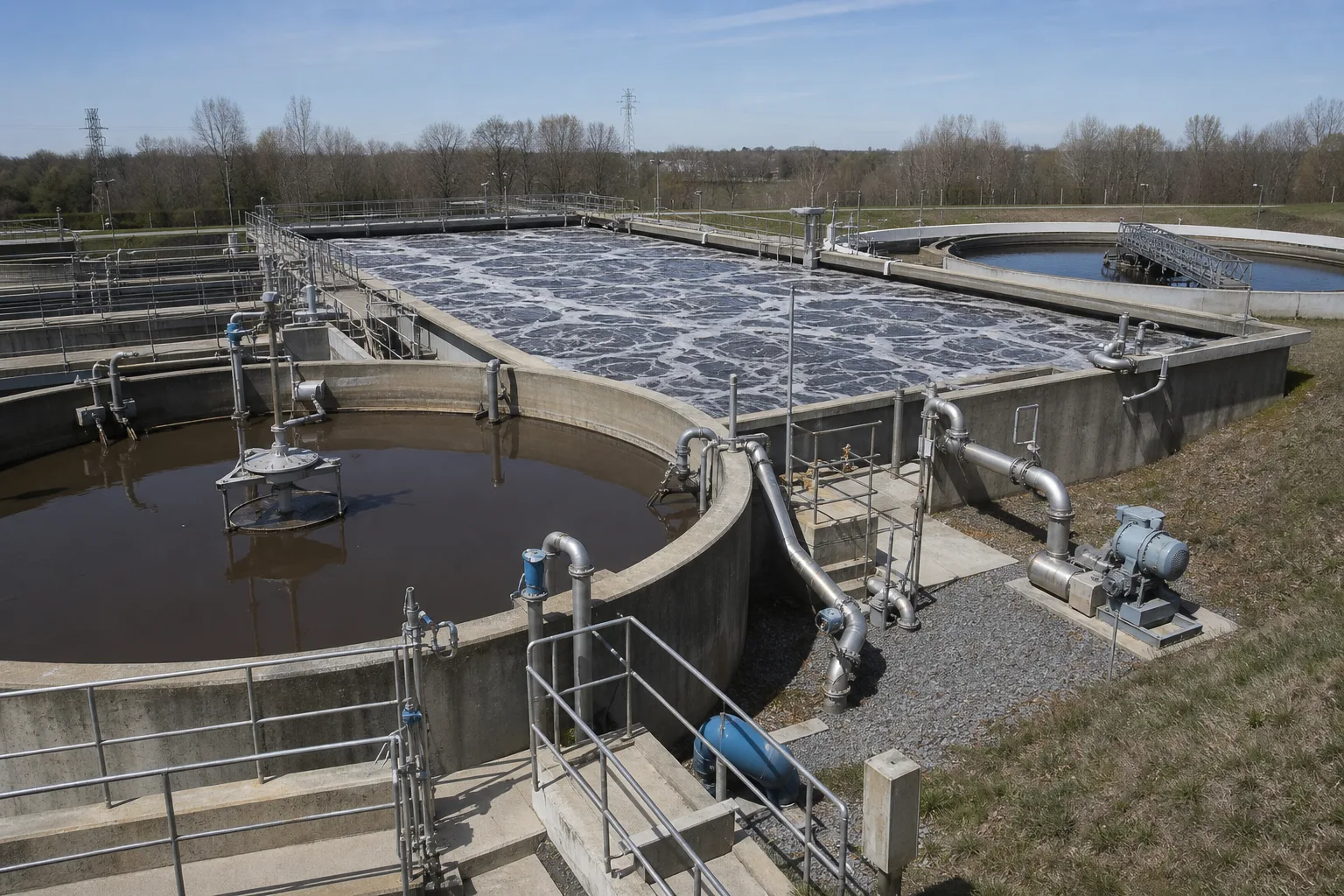 11Anaerobic zone without DO/NOx22Aerobic excess-uptake zone33Clarifier and sludge return44Phosphorus-rich sludge wasting
What to identify
- 1Anaerobic zone without DO/NOx
- 2Aerobic excess-uptake zone
- 3Clarifier and sludge return
- 4Phosphorus-rich sludge wasting
What the image proves
Phosphate first rises in water, is then concentrated in biomass and finally leaves through wasting. Tanks without the correct influent, RAS and waste paths do not guarantee net removal.
How to verify on site
Verify flows, anaerobic DO/nitrate, zoned orthophosphate, WAS mass and sludge phosphorus; close a water-plus-solids phosphorus balance.
PAOs use different intracellular stores in anaerobic and aerobic phases
Warm anaerobic and cool aerobic sides visualize cells, PHA/glycogen and polyphosphate changes. Colors and granules explain mechanism, not direct routine microscopy.
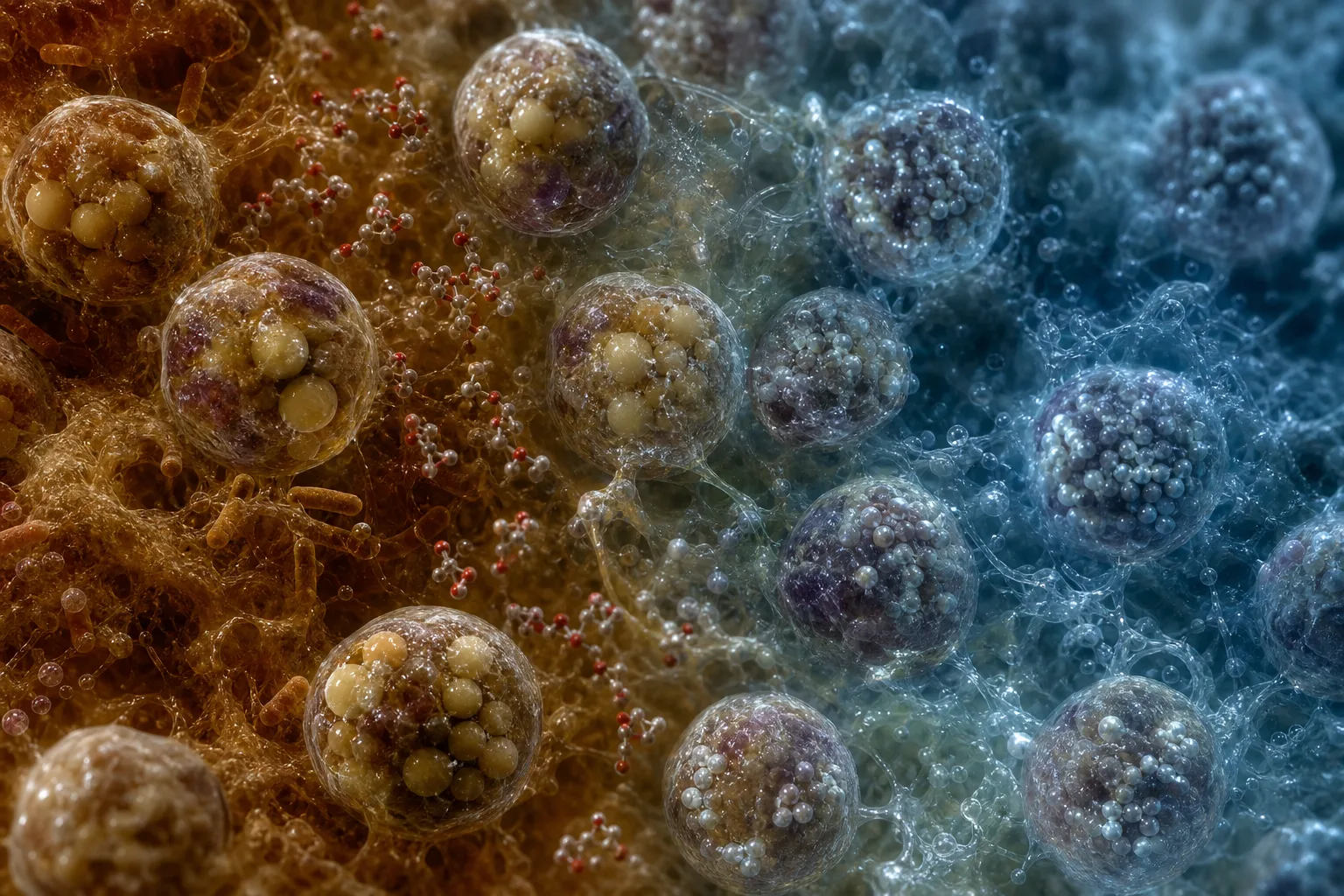 11Anaerobic VFA uptake22Poly-P breakdown and phosphate release33Aerobic PHA oxidation44Rebuilt/increased poly-P granules
What to identify
- 1Anaerobic VFA uptake
- 2Poly-P breakdown and phosphate release
- 3Aerobic PHA oxidation
- 4Rebuilt/increased poly-P granules
What the image proves
PAOs spend poly-P energy to store carbon anaerobically, then use stored carbon to take up more phosphate later. Release without subsequent excess uptake signals a broken cycle.
How to verify on site
Run paired anaerobic-release/aerobic-uptake batch tests with PO₄-P, VFA/COD, DO/ORP and time; use specialized staining, molecular or chemical methods for PAO/PHA/poly-P confirmation.
Hydraulic order lets PAOs access VFA before uptake
The cutaway shows unaerated contact, diffuser-equipped aerobic uptake and settling, with RAS/WAS lines linking biomass selection and removal.
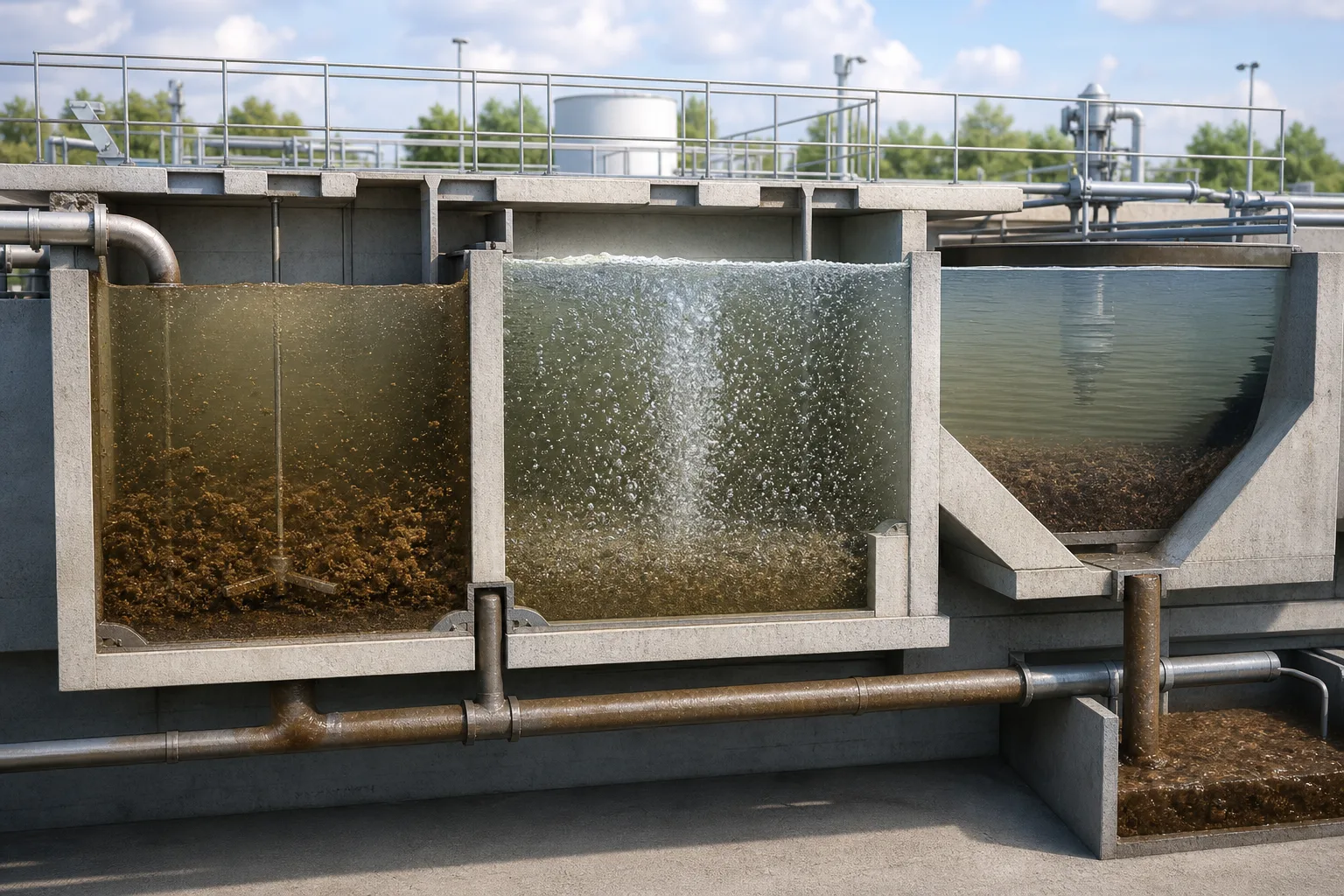 11Influent plus RAS anaerobic contact22Aerobic uptake and growth33Clear water and sludge blanket44RAS return and WAS removal
What to identify
- 1Influent plus RAS anaerobic contact
- 2Aerobic uptake and growth
- 3Clear water and sludge blanket
- 4RAS return and WAS removal
What the image proves
The anaerobic zone gives PAOs first access to influent VFA; the aerobic zone performs uptake; the clarifier separates solids. Nitrate-rich RAS or long blanket retention changes both selection and phosphorus fate.
How to verify on site
Measure PO₄-P/TP, VFA, nitrate and DO at influent, anaerobic end, aerobic end, effluent and RAS; verify blanket, RAS/WAS and actual HRT.
Low VFA, good selection and NOx intrusion create different profiles
Parallel anaerobic/aerobic pilot trains with mixers and probes compare weak cycling at low VFA, complete release/uptake and electron-acceptor contamination.
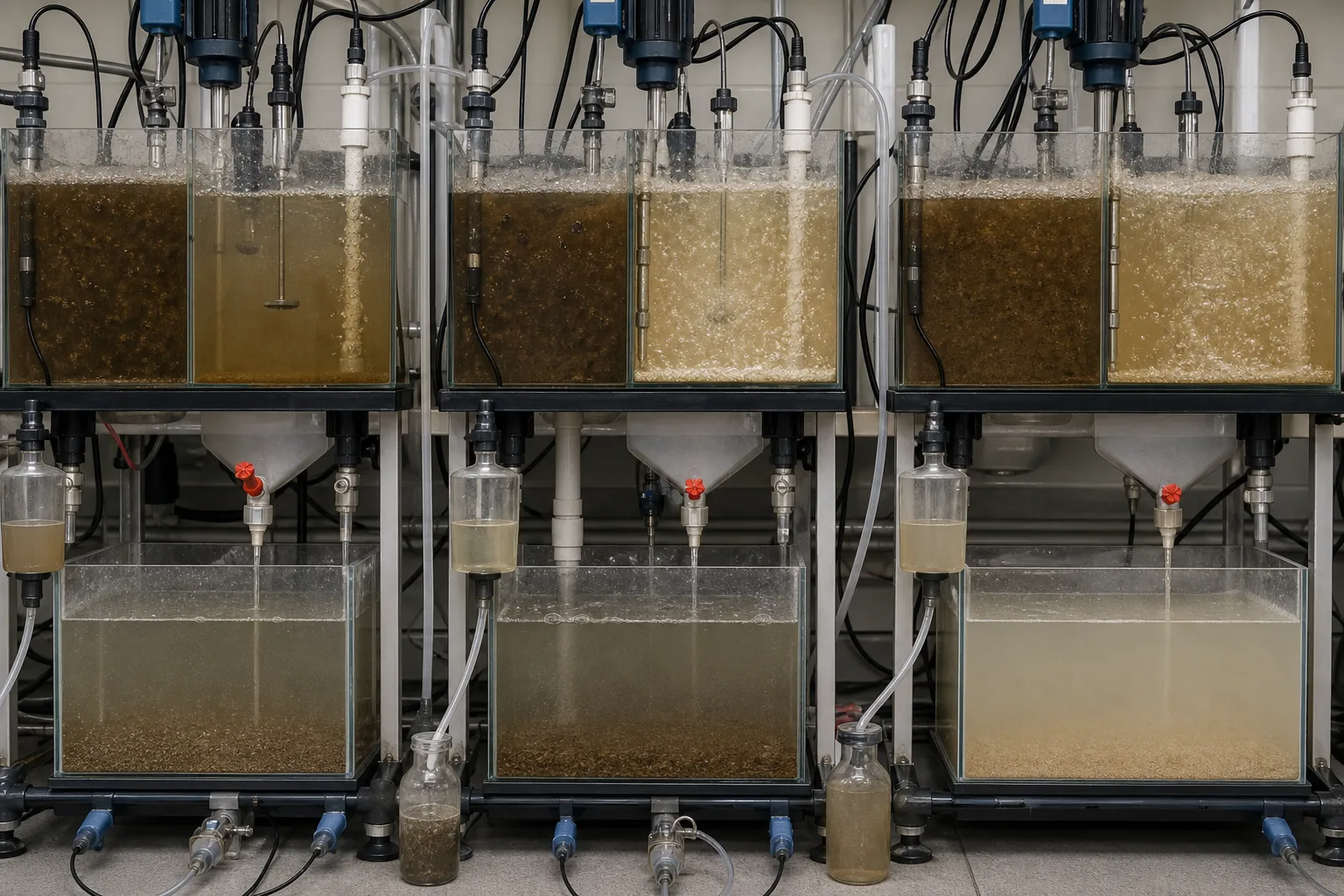 11Low VFA: weak release/uptake22Matched VFA: complete cycle33NOx/DO intrusion upstream44Zoned PO₄/ORP/DO sampling
What to identify
- 1Low VFA: weak release/uptake
- 2Matched VFA: complete cycle
- 3NOx/DO intrusion upstream
- 4Zoned PO₄/ORP/DO sampling
What the image proves
A high anaerobic phosphate peak does not guarantee low effluent; subsequent uptake must exceed release and wasting must create net export. Almost no release often points to low VFA or electron-acceptor contamination.
How to verify on site
Build timed anaerobic-to-aerobic PO₄-P curves with VFA, NO₃/NO₂, DO/ORP and sludge P while holding temperature, MLSS and initial load comparable.
Diagnosis combines water phosphorus, sludge phosphorus and recycle loads
Process contact, field samples/probes, a settling column and microscopy provide hydraulic, dissolved-P, solids and community evidence.
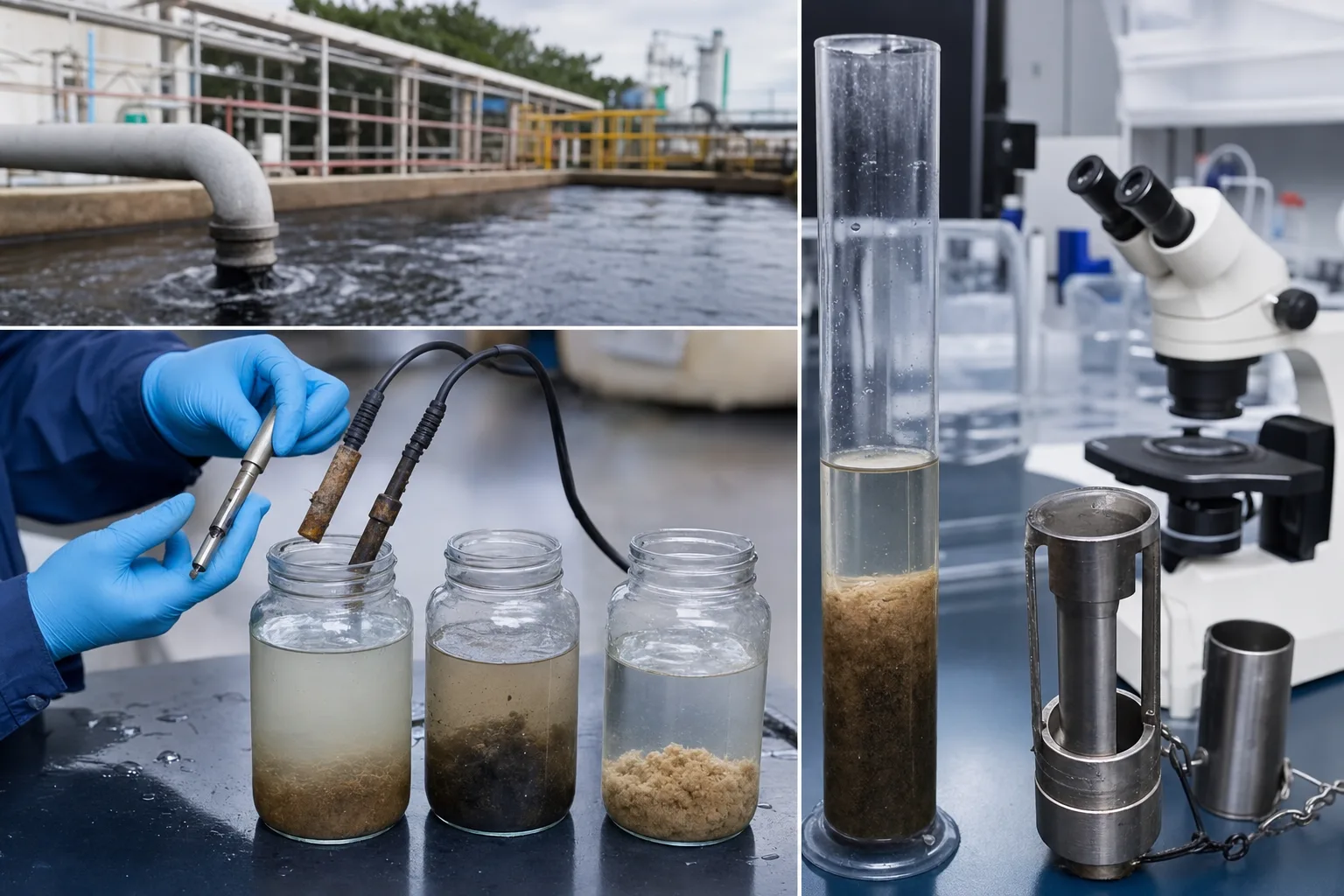 11Influent and RAS contact22Zoned PO₄/NOx/DO samples33Settleometer and sludge-P sample44Microscopy/staining and activity
What to identify
- 1Influent and RAS contact
- 2Zoned PO₄/NOx/DO samples
- 3Settleometer and sludge-P sample
- 4Microscopy/staining and activity
What the image proves
Effluent TP includes dissolved and particulate phosphorus. Good biological uptake plus solids loss still produces high TP, while sludge-processing release can return a hidden load upstream.
How to verify on site
On one day track zoned soluble PO₄-P, effluent TP/TSS, WAS mass and P content, blanket, and sludge-process recycle TP flow to close the plant balance.
Six steps from influent phosphorus to rich sludge
The path shows why release is not removal and wasting completes the job.
1 Anaerobic selection
Influent VFA + PAO in RAS
Give PAOs first access to carbon with no DO/NOx.
2 Release for energy
Intracellular poly-P → water PO₄-P + energy
Power VFA uptake by breaking polyphosphate bonds.
3 Store carbon
VFA → PHA; glycogen participates
Create an internal reserve for the next phase.
4 Aerobic/anoxic uptake
PHA + O₂/NOx → growth + phosphate uptake
Gain energy and take up phosphate in excess.
5 Rebuild poly-P
Water PO₄-P → intracellular poly-P
Concentrate phosphorus in biomass.
6 Waste for net removal
P-rich WAS → sludge processing/export
Remove phosphorus and limit recycle release.
Four key roles in EBPR
The process selects functions rather than one species; competitors and solids handling shape final TP.
PAO/DPAO
- Main duty
- Store VFA/release P anaerobically, then take up excess P aerobically or anoxically
- Failure mode
- Low VFA, acceptor intrusion, extreme SRT/pH/temperature or toxicity
- Field evidence
- Release/uptake rates, sludge P and specialized PHA/poly-P analysis
VFA and rbCOD
- Main duty
- Provide rapid substrate for anaerobic carbon storage
- Failure mode
- High total COD can still give weak release when VFA is low
- Field evidence
- VFA/rbCOD, fermentate flow and anaerobic PO₄ curve
DO/NOx and hydraulics
- Main duty
- Create true anaerobic selection and proper downstream acceptor
- Failure mode
- NOx-rich RAS, air leaks, short circuits or dead zones let competitors consume VFA
- Field evidence
- Multipoint DO/ORP/nitrate, tracer and actual HRT
WAS and sludge recycles
- Main duty
- Export phosphorus-rich solids and control SRT
- Failure mode
- Low wasting or long blanket/thickening/digestion retention releases P back
- Field evidence
- WAS mass/P, blanket and recycle TP load
Ordinary biomass synthesis assimilates some phosphorus and chemicals can precipitate phosphate. EBPR is distinguished by anaerobic release followed by uptake beyond ordinary growth. Very low effluent targets often combine EBPR, strong solids separation and chemical backup.
Track three evidence groups
Anaerobic selection
Influent VFA/rbCOD, anaerobic DO/ORP, nitrate/nitrite, phosphate-release curve and RAS loads show whether PAOs receive carbon first.
Uptake and net export
Aerobic/anoxic phosphate decline, effluent soluble P/TP/TSS, sludge P, WAS mass and SRT distinguish uptake, solids loss and real export.
Return loads
Blanket, thickening/digestion/dewatering recycle PO₄-P/TP and flow, sludge retention and chemical addition quantify phosphorus returned to the main line.
What do phosphorus profiles suggest?
- Signal combination
- Little anaerobic phosphate rise and very low VFA
- First suspicion
- Insufficient readily available carbon for classic PAO storage
- Next action
- Measure VFA/rbCOD and fermentation potential, review influent distribution; more aeration is not the remedy
- Signal combination
- No anaerobic release with measurable nitrate or DO
- First suspicion
- RAS/recycle or air leakage brings acceptors and competitors consume VFA
- Next action
- Locate NOx/DO input, change recycle discharge and hydraulics, then reassess the community
- Signal combination
- Clear anaerobic release but high aerobic-end phosphate
- First suspicion
- Uptake limitation or secondary release from DO, SRT, pH/T, toxicity, PHA depletion or aging
- Next action
- Run release/uptake tests and verify zoned conditions plus actual HRT/SRT
- Signal combination
- Low soluble phosphate but high effluent TP and TSS
- First suspicion
- Biological uptake works but phosphorus-rich solids escape
- Next action
- Fix clarification, RAS/WAS and hydraulics before blaming PAO metabolism
Four misconceptions
Less anaerobic release is always better
Release is evidence of VFA uptake in classic EBPR; no release can mean low VFA or DO/NOx contamination.
Phosphorus is removed once cells take it up
Uptake only transfers P to sludge. Wasting and avoiding recycle release complete net removal.
No aeration automatically means anaerobic
Nitrate/nitrite also defeats the classic anaerobic selector, which still needs mixing and VFA.
High effluent TP always means EBPR failed
TP may be dissolved or particulate; solids loss, recycle loads and filtration/sampling differences matter.